AWOC UK co-chair Jenny Collieson reflects on how both our locally-grounded activities and our future plans build on the national and international themes of International Day of Older People 2026 …
“Our vision is a world in which older people who are ageing without children can age well and thrive in later life” (AWOC UK, 2026)
This year I will be marking International Day of Older People by attending a memorial lecture in honour of a former colleague who was a passionate champion of the rights of older people in the city in which I live, York. The lecture “Realising the right to age well” also marks the first day of the York 50+ Festival which has become a well-established programme of events in the York autumn calendar reflecting the city’s “age-friendly” commitment.
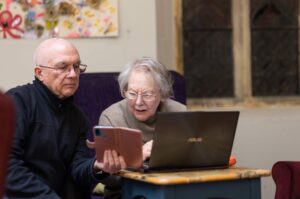
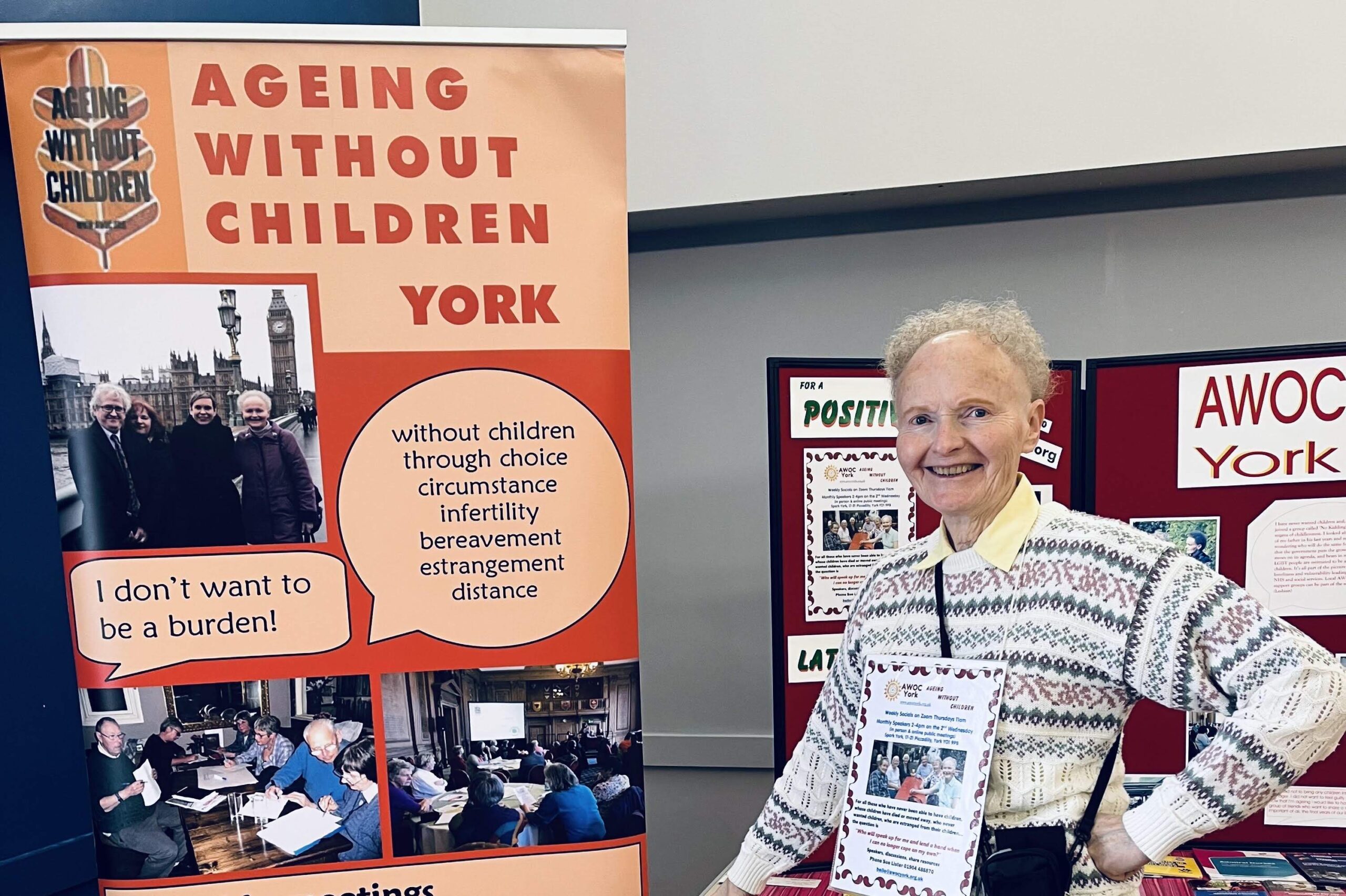
York is also the location of one of the most established and popular AWOC local groups coordinated by local legend Sue Lister (pictured above) who always contributes an event or two to the IDOP programme.
As someone who has been involved in the development of AWOC UK for over a decade I have been reflecting on how this year’s IDOP themes – both global and national – align with our charity’s mission and values.
The AWOC UK Board has been working on reviewing and refreshing our strategy this year, looking ahead to what we would like to achieve by 2030 and how we are going to sustain AWOC UK as an effective organisation and a trusted voice for people who are navigating the challenges of later life without the support of adult children or other close family.
Our most recent blog post by fellow trustee Alison Neves highlights some of the findings from our AWOC survey earlier this year which was a key part of our strategic review process.
The 2026 global IDOP theme “the age of longevity, rethinking systems for longer lives” and the UK theme promoted by the Centre for Ageing Better “What’s on your doorstep” both resonate with the work we have been doing at AWOC UK and the world we want to see – one in which the varied and diverse lived experiences of people ageing without children are used to drive improvements in services and support at both national and local levels. The AWOC York group and some others in the network have been very successful in integrating into the local voluntary and community sector landscape and ensuring AWOC views are represented and taken into account.
Since 2021 AWOC UK has been a tiny charity dependent on donations and volunteers to lead, set up and deliver a local network of groups, to campaign on the issues that AWOCs feel matter most to them, and to provide tailored support and relevant resources which can help people plan with confidence for an old age where family support is absent.
We have a lot of work to do over the next few years to deliver our newly-agreed strategic priorities and put our organisation on a surer footing in terms of governance, collaboration and income generation. However, on this year’s International Day of Older People, we should also be celebrating how far we have come since the early days of the AWOC movement when it seemed hard to convince even many of the organisations working in the ageing sector that “people ageing without children” was a growing issue worthy of more attention and action.
A summary version of the refreshed AWOC UK strategy will be published later this month.
Jenny Collieson